By Ruichen Feng, CYOC Vice President and Engineering Workshop Co-Founder and Instructor
Photography by CYOC Adult Advisors
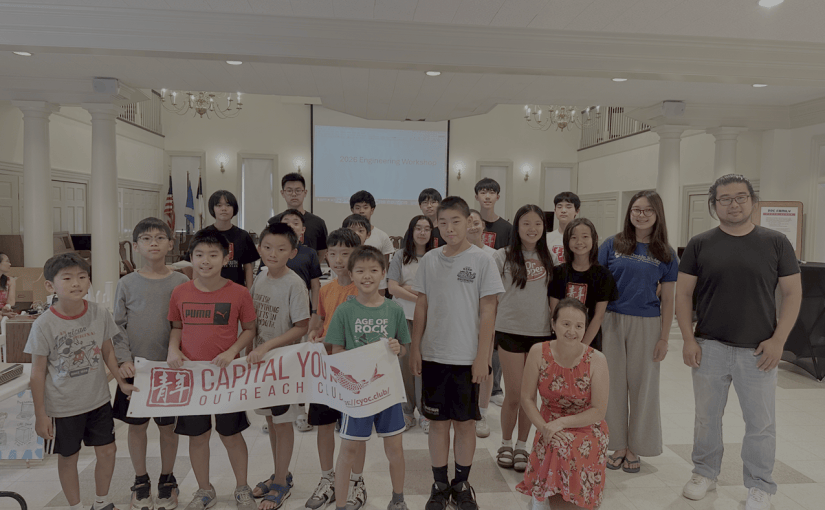
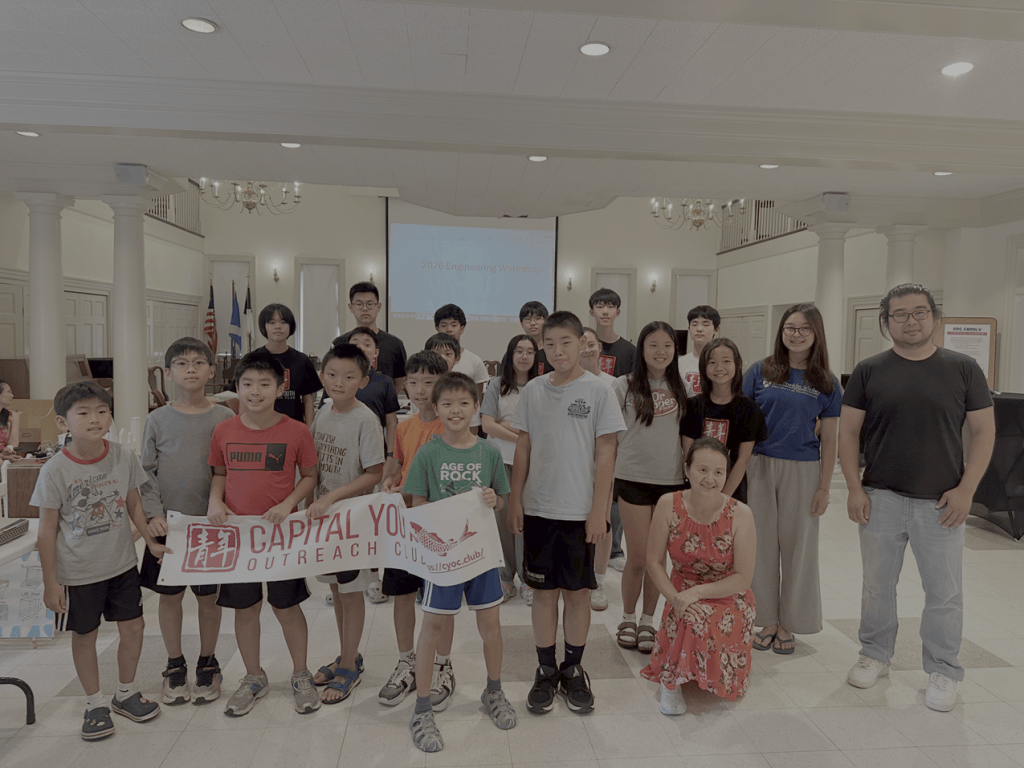
On August 14, 2026, we concluded CYOC’s Week 2 Summer Engineering Workshop with two inspiring guest-speaker presentations, a family showcase, and a celebration party. It was a great ending to a week filled with designing, building, testing, teamwork, and problem-solving.
This was the second year of our summer engineering program and the third engineering workshop I have had the opportunity to teach. Our instructor team included Evan Chen, George Wang, and me. As members of CYOC, we share a passion for STEM and for helping young people explore future academic and career opportunities in engineering and technology.
The Week 2 workshop was designed as a more advanced program for students who already had some engineering experience and knowledge. We hosted 20 students, most of whom were rising middle school students to rising high school students. Throughout the week, they strengthened their 3D-design skills and learned how engineering concepts can be used to create functional products.
Learning Through the Engineering Design Process
On the first day, students introduced themselves and learned about the workshop’s goals and schedule. We reviewed the basics of 3D design using Onshape, including familiar projects such as a personalized name tag and a sword. Students then learned how to use a caliper to take precise measurements. We discussed how bearings work and introduced the concept of a press fit, in which two parts are designed to fit tightly together without additional fasteners.
Using the dimensions they measured themselves, students designed their own fidget spinners. This activity helped them understand an important engineering lesson: accurate measurements are essential when a digital design must fit a real physical component.
On the second day, students assembled the 3D-printed parts of the fidget spinners they had designed. Seeing their digital models become physical objects was exciting and rewarding. We also introduced springs and gears and discussed how these mechanical components store energy, transfer motion, and appear in many everyday machines. Students then began designing a launcher project and a gear project.
On the third day, we printed the parts for the ball launchers and began assembling them. Students continued working on their fidget spinners, completed their gear projects, and used animation tools to observe how their designs would move. They also started a propeller-launcher project using their knowledge of gears, specifically racks and pinions.
One of the most positive parts of the day was seeing students share ideas and help one another. When someone encountered a design or assembly problem, classmates often offered suggestions. This kind of collaboration is an important part of real engineering, where successful solutions are frequently created by teams rather than by individuals working alone.
By the fourth day, students were ready to complete the final propeller-launcher design. I was impressed by how quickly they had learned and how confidently they were using the design tools. Concepts that had seemed unfamiliar at the beginning of the workshop were becoming part of their normal problem-solving process.
Students also watched a demonstration of a driving-simulator steering wheel, which showed another practical application of engineering and product design. They were introduced to an artificial intelligence tool that could support 3D design, allowing them to explore ideas based on their personal interests. Throughout the day, students continued working in small groups, learning how to communicate, divide responsibilities, and solve problems together. We also made time for outdoor activities so that everyone could take a break, recharge, and enjoy time with friends.
Final Assembly and Family Showcase
On the fifth and final day, students assembled their propeller launchers and prepared to present their work. The completed projects represented much more than printed plastic parts. Each one reflected a process of measurement, design, experimentation, troubleshooting, and persistence.
We celebrated the end of the workshop with a pizza lunch at noon. Later in the afternoon, parents and family members joined us for our final showcase. From 2:00 to 2:30 p.m., students shared the projects they had built and explained what they had learned during the week. Two guest speakers also arrived to give personal insight on how they use engineering and CAD to start a business, and how to discover and participate in interesting and niche engineering clubs.
The showcase gave students an opportunity to practice communicating technical ideas. Explaining a design to someone else requires a student to think carefully about how the product works, why certain design decisions were made, and what challenges had to be overcome. It was wonderful to see students proudly demonstrate their projects and share their learning experiences with their families.
Inspiration from Our Guest Speakers
We were also honored to welcome two guest speakers who helped students connect the activities of the workshop with future educational and career possibilities.
Iris Ou, a rising sophomore at the University of Pennsylvania, shared her experience studying engineering. Her presentation gave students a glimpse of what it is like to continue exploring engineering at the university level. Hearing directly from a young engineering student made the college experience feel more understandable and achievable. Her story encouraged students to remain curious, continue building their skills, and recognize that the projects they are completing now can be the beginning of a much longer STEM journey.
Our second speaker, Mr. Yizhen Chen, who works in the information technology field, shared his experience with 3D design. His presentation helped students see that the skills they practiced during the workshop have applications beyond the classroom.
Together, the two presentations showed students a clear path from learning engineering skills as a young student, to studying engineering in college, to applying technical knowledge in a professional career. Their experiences reminded students that there is no single path into engineering or technology. What matters is continuing to learn, being willing to solve difficult problems, and remaining open to new possibilities.
My Reflection as an Instructor
I volunteered to teach in the classroom and to help students with their 3D designs and product assembly. For me, the most rewarding part of the workshop was watching students transform their ideas into physical products they could hold, test, and improve.
A design may look perfect on a computer screen, but the assembly process often reveals unexpected problems. Especially in the Onshape software, sometimes moving parts may pass through each other, which could result in an assembly looking fine on the computer, but problematic in real life. A. These moments can be frustrating, but they are also some of the best learning opportunities. Students discovered that an unsuccessful first attempt is not a failure, but a learning experience.
I was especially impressed by the students’ progress during the week. They became more independent, more comfortable using engineering vocabulary, and more willing to experiment. I also noticed that some began to help other struggling students, helping them understand the design process from multiple points of view. They exchanged ideas, compared designs, helped with assembly, and celebrated one another’s successes. Their teamwork demonstrated that STEM education is not only about technical knowledge. It also develops communication, creativity, confidence, and perseverance.
Appreciation
I would like to express my sincere appreciation to CYOC and the adult advisors for supporting this program and providing students with opportunities to explore engineering through hands-on learning. Programs like this require significant planning, equipment, materials, coordination, and community support. CYOC’s commitment made it possible for students to use professional design tools, build real products, meet STEM role models, and share their accomplishments with their families.
Thank you to my fellow instructors, Evan Chen and George Wang, for their knowledge, preparation, teamwork, and dedication throughout the workshop. Thank you to our guest speakers, Iris Ou and Mr. Yizhen Chen, for sharing their time and experiences with our students. I also appreciate the parents and families who encouraged the students and attended the final showcase.
Finally, thank you to all 20 students for bringing your curiosity, creativity, and energy to the workshop. Your willingness to try new things, help your classmates, and keep improving your designs made this week a success. I look forward to seeing where your ideas, skills, and imagination take you next.
Website Editor: Lily Xu


You must be logged in to post a comment.