
COLLEGE PARK, Md., August 9, 2026 – The TG Academy of Innovation (TGAI) concluded its 2026 Summer Innovation Course and Workshop on Sunday with Personal Innovation Plan (PIP) presentations and a closing ceremony at the University of Maryland, College Park. Over 20 students, parents, instructors, advisors, and staff attended the final-day event.
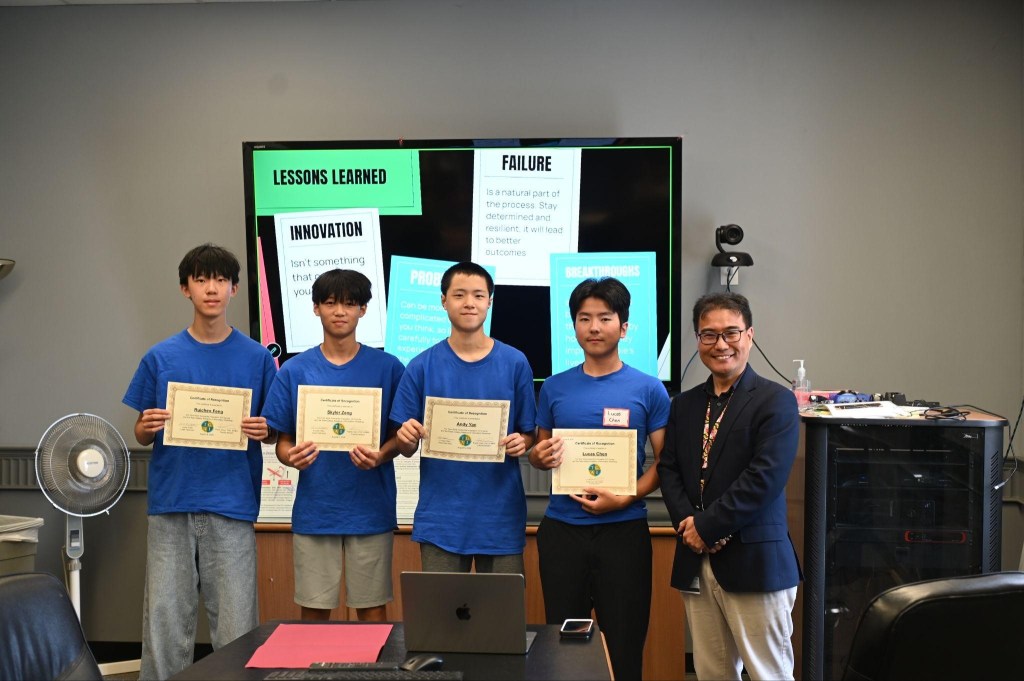
The closing ceremony marked the culmination of a program that began July 4 and progressed through student recruitment, interviews and enrollment in mid-July, followed by asynchronous learning and an intensive workshop in early August. Eleven students joined the inaugural cohort, representing Washington, D.C. – Maryland – Virginia region as well as participants from California and Hong Kong.
Across TGAI activities, guest talks, and program events this summer, cumulative attendance exceeded 80 participants, reflecting strong interest among students and families in STEM, research, engineering, and innovation.
The Shape of Things to Come: A Student-Operated, Faculty-Advised Model for Future Innovation Education
TGAI was designed around a student-operated, faculty-advised model: young innovators with firsthand competition and project experience teach and mentor other students, while university faculty and professionals provide guidance and support.
The 2026 program combined two components. Innovation 101, a week-long asynchronous course, introduced students to the fundamentals of identifying meaningful problems, understanding user needs, conducting research, developing solutions, and communicating innovation. The subsequent Innovation Workshop brought these concepts to life through discussions, activities, guest speakers, and a detailed case study of Team Galaxy’s award-winning innovation journey.
Rather than studying innovation only as a set of concepts, students examined how an actual student team progressed from an early problem to research, stakeholder engagement, solution development, iteration, and national STEM competition. Lead Instructor Lucas Chen and Team Galaxy members (Ruichen Feng, Andy Yan, Skyler Zeng) led the case discussions, sharing both the successes and challenges they encountered along the way.
From a Case Study to Each Student’s Own Plan
The program ultimately asked students to turn what they had learned toward their own futures.
Eight students completed all program requirements and developed a Personal Innovation Plan (PIP) for the coming year. During the August 9 final session, students presented their interests, goals, potential projects, and next steps to fellow students, parents, instructors, and advisors.
The PIPs covered students’ individual paths beyond the Academy, with a number of participants committing to pursue STEM competitions, research, engineering projects, or other innovation activities during the coming year. A special lecture about “how to make a scientific presentation” was given by Dr Jia-an Yan to help students prepare their PIP reports.
The closing ceremony therefore represented not simply the end of a summer workshop, but the beginning of the next phase of the program.
TGAI plans to continue as a fellowship and support network for young innovators, with regular progress check-ins that allow students to share what they are working on, exchange ideas, and support one another throughout the year.
Students are also beginning to take greater responsibility for the Academy itself. New teams are being established in Communication, Project Management, and New Product Development, providing opportunities for students interested in STEM and innovation to help develop future TGAI programs and activities.
Learning from Scientists and Young Researchers
The 2026 program also connected students with researchers whose careers illustrate different pathways into STEM innovation.
Dr. Zach Claytor, an astronomical data scientist working on archive operations for the Nancy Grace Roman Space Telescope program, spoke with students about his work and experience in astronomical research and scientific data.
Angela Wu, an MIT student studying chemistry and biology and a 2024 Regeneron Science Talent Search Top 300 Scholar, shared her journey from high school STEM research to MIT and discussed how students can develop meaningful plans for research, competitions, and future opportunities.
Together with the Team Galaxy case study, these talks exposed students to innovation from multiple perspectives – from high school competitions to university research and major scientific programs.
Built by Students, Mentors, Faculty, and Community
The 2026 TGAI instructional team was led by Lucas Chen, with Team Galaxy members Ruichen Feng, Andy Yan, and Skyler Zeng serving as mentors.
Faculty advisors included Dr. Frank Chen of Johns Hopkins University, Dr. Yanxin Liu of the University of Maryland, and Dr. Jia-an Yan of Towson University.
The program was supported by Chuanfeng Wu, Tiffany Wen, and Dechun Feng, along with parents, volunteers, and community supporters who contributed throughout the summer.
TGAI also extends its appreciation to Sharon Shen, Ping Lv, Ibrahim Boyenle, Tao Chen, Jun Zhao, Yuxiang Xie, Yu Yang, Isabelle Balakit, and many others who helped make the inaugural program possible.
The 2026 TG Academy of Innovation Summer Course and Workshop was sponsored by the Capital Youth Outreach Club (CYOC).
With its first cohort now completing the summer program, TGAI moves into its next stage: turning a one-week workshop into a continuing community in which students can develop ideas, pursue STEM opportunities, support one another, and ultimately help the next generation of young innovators do the same.
Website Editor: Grace Yan


You must be logged in to post a comment.