By: Susanna Lee and Samuel Lee
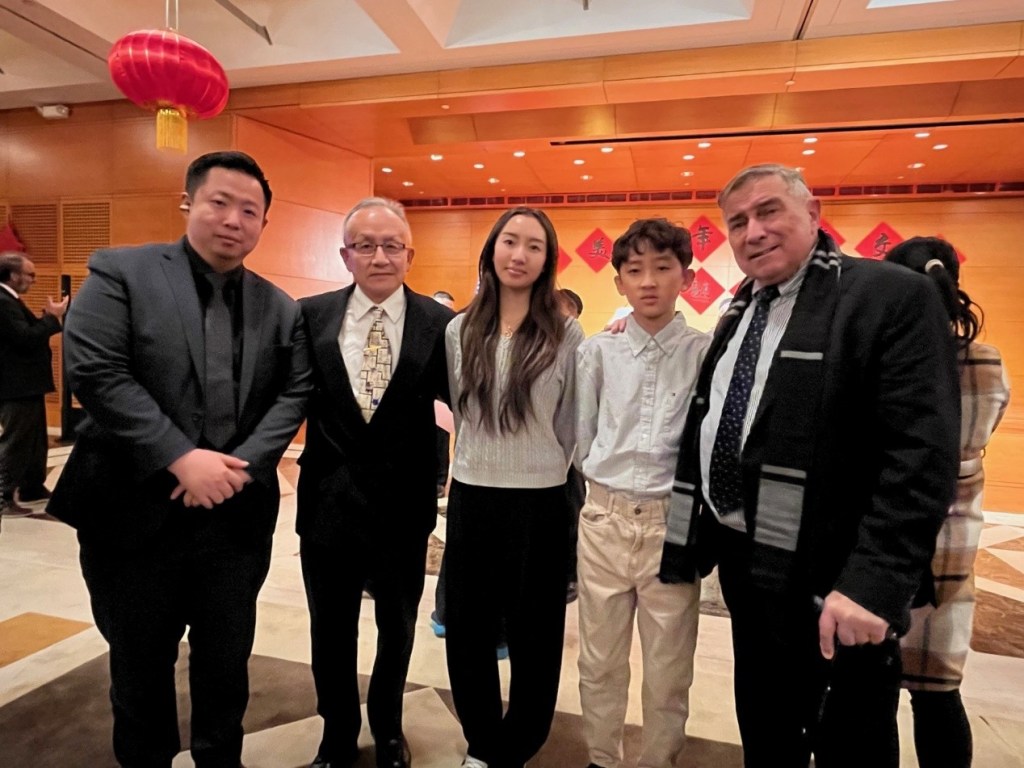
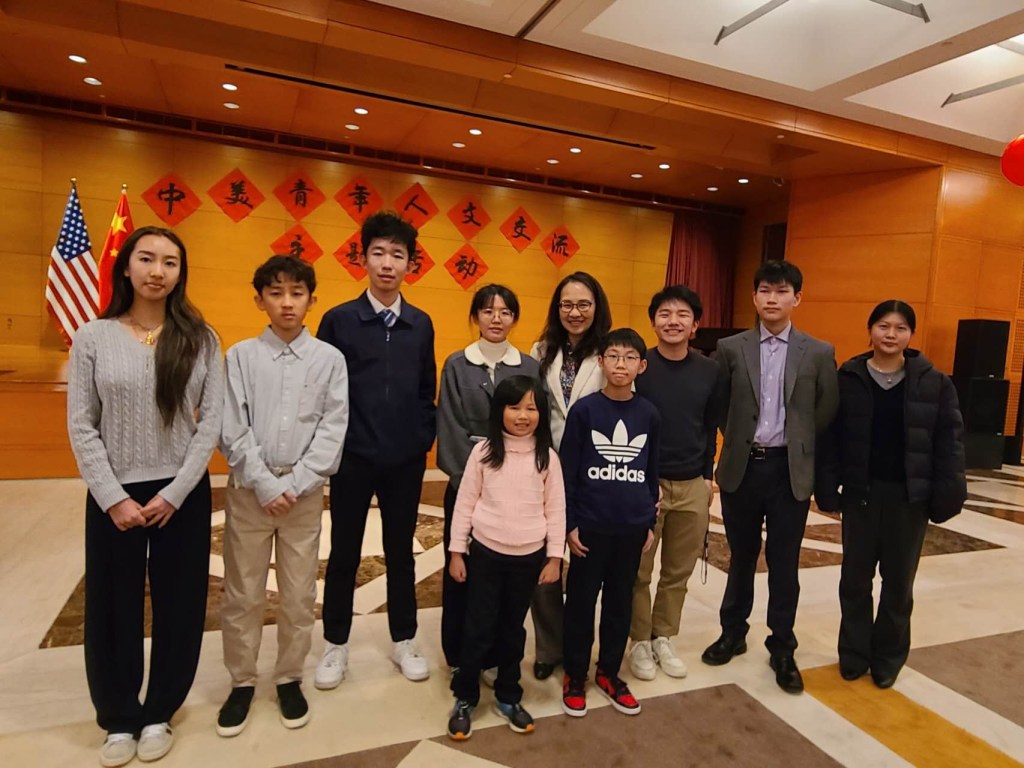
On Dec 6th, 2024, we were invited to attend a China-US Youth Exchange Event at the Chinese Embassy as representatives of Capital Youth Outreach Club.
In this event, we met many sons and daughters of the famous Flying Tiger pilots. We were so excited. Suddenly, the stories that were passed down to us from our parents, grandparents and great grandparents came to life vividly. Our father was born in Shanghai, he has been to Kunming only twice in his life, but he’s never stopped mentioning Kunming, a mystical and divine place, and a city of family heritage.
Kinese fight against the Japanese military during World War 2. At that time, our great grandma was a Christian pastor, establishing churches and schools. Since she spoke English well, many American officers and soldiers came to visit our great grandparents and their estates. So, they had a deep connection with the Flying Tigers. Even more surprisingly, the son of the executive director of the Sino-American Aviation Heritage Foundation (https://sinoamaviation.com/) was a graduate of Kunming’s #3 high school, or the “Kun Shan Zhong Xue”, which was the “En Guan School” founded by our great grandma!
We listened to the war stories of how the American pilots attacked the Japanese positions as if pictured in a war movie. Many pilots lost their lives in the fighting or by flying over the treacherous Himalaya Mountain, estimated over 2,500 American pilots and crew members were killed between 1941 to 1945 in China, a piece of history not well known to many people in the past, but now the bravery and the sacrifices of these American pilots are getting to known with greater appreciations by all Chinese.
Our great grandparents had some remarkable influences in Kunming. Our grandma taught many people English, including Zhu De, the supreme commander of the Chinese military, in the 1920s. Our grandpa developed a private village to house the professors at the National Southwest Associated University to live, such as the famous writer, “Shen Chong Wen”.
Due to our deep roots in Yunnan, we joined the CYOC culture exchange program withMalipokids since it started and visited Yunnan in the past summer. We got to witness the beautiful places with our own eyes. We were surrounded by many different types of plants, fruits, and flowers. Each hill and meadow we passed had its own uniqueness. Yunnan is rich in many different ethnic minorities, there are a total of 25 ethnic minorities. It was amazing to learn how each minority had its own cultural outfits and styles of dance. We also explored more varieties of food such as, “Guo Qiao Mi Xian” also known as, “Crossing Bridge Rice Noodles”. We learned that there was a specific order to eat it; you were to add the raw meat and quail eggs first, then the vegetables, the noodles were next, and lastly, any sauces or seasonings.We also tasted the local coffee at Kunming City. We remembered that the pure black coffee there was naturally way less bitter compared to the pure black coffee sold in the US.
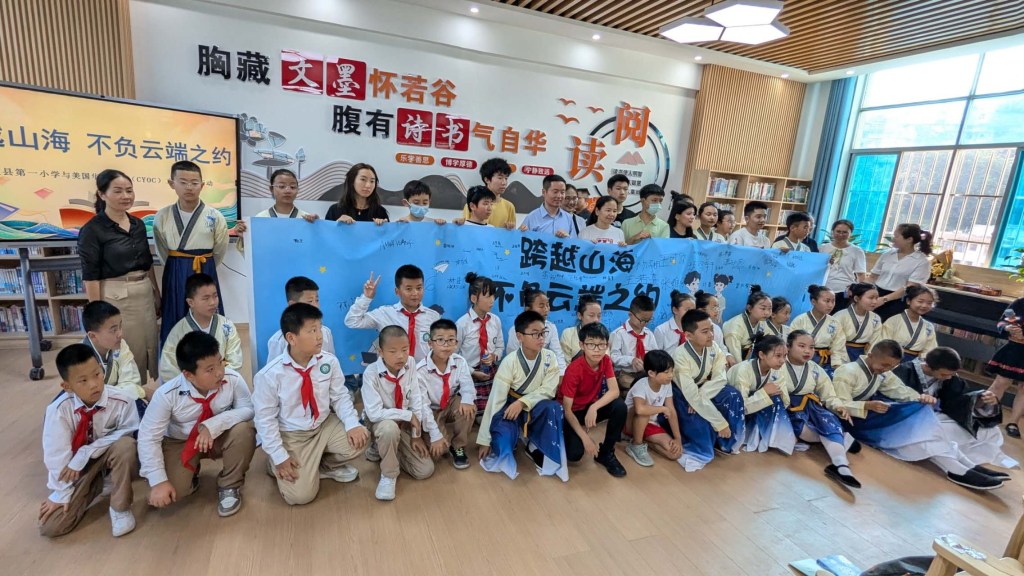
We were mostly grateful for the people inMalipo. It’s a small town situated at the border of China and Vietnam. We have been sharing cultures with kids from Malipo Number One Elementary School using WeChat. It’s great to see these lovely young faces in person and experience the cultural activities with them. We particularly appreciated the deep care that Samuel received in Malipo. When we first arrived there, Samuel became sick. The people there were so warm, and they showed their hospitality to us. Samuel was well taken care of medically and fully recovered by the time we arrived in Kunming.
This youth exchange program was so meticulously well organized.It’s great to hear all the culture exchangestoriesfrom the panelists. We’d like to thank the embassy for initiating this wonderful event, and a deep appreciation to CYOC for giving us this opportunity and great experience.
 华府青年 CYOC
You must be logged in to post a comment.